

by Brad Houle, CFA
Principal
Head of Fixed Income
Portfolio Management
As expected, the March inflation report came in hot. Consumer Price Index (CPI) rose 0.9% month over month and 3.3% year over year - the largest monthly move in nearly four years. At first glance, it looks like inflation is reaccelerating; however, the move is almost entirely explained by energy. When the change in rate of inflation moves this fast, it is usually due to an exogenous shock to the economy, not excess demand driving higher prices. In this case, the war in Iran caused gasoline prices to jump 21% in a single month, feeding straight through to consumers and driving the majority of the increase.
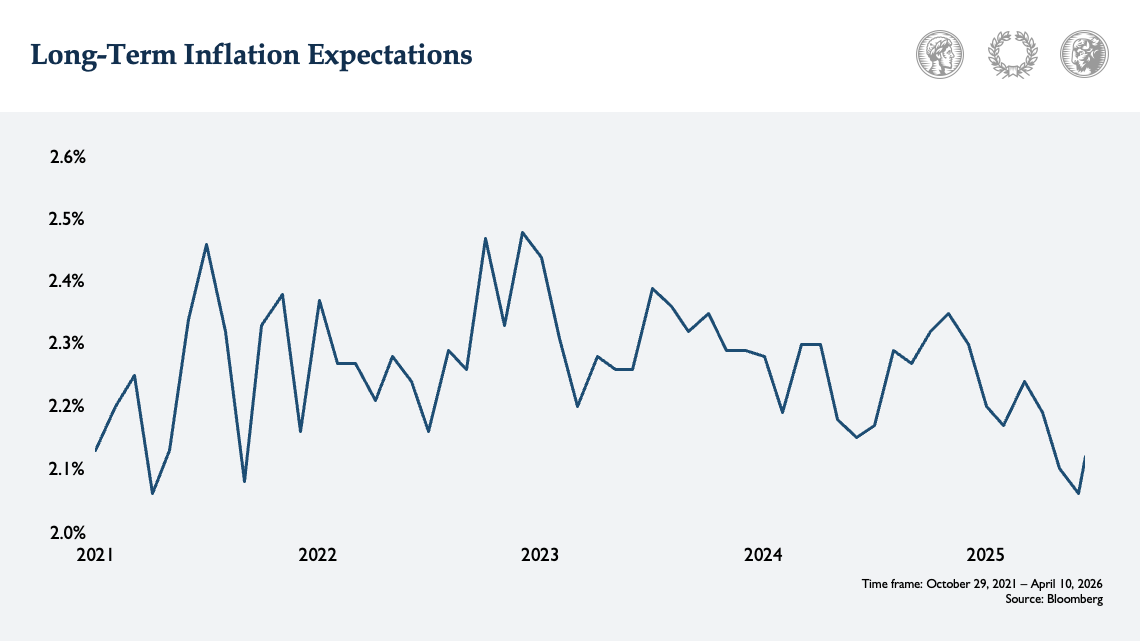
Despite the inflation increase in energy, core inflation, which excludes energy and food, came in below expectations. If we were to see broad-based pressure across services and wages, we would expect the Fed to be more concerned about a more persistent increase in inflation, but underlying inflation remains relatively well-behaved. This is the key distinction. Headline inflation is volatile while core inflation is a more stable long-term indicator of the trend. The graph below depicts the market expectation for the long-term rate of inflation. Expected long-term inflation expectations have changed very little since the conflict, indicating that the markets view the recent inflation as transitory.
The sharp increase in energy prices contributed to plummeting consumer confidence, which has reached historic lows. This month’s preliminary data from the University of Michigan shows the lowest sentiment level in the survey's history. Financial markets focus on the rate of change in inflation, whereby consumers feel the impact from the compounding effect of inflation on the prices of everyday goods. This compounding effect, coupled with the recent spike in energy prices, has led to the sour mood of the average U.S. consumer.
Oil prices have declined rapidly anytime there is an indication that the conflict will come to an end. On April 8, the day that the two-week ceasefire was announced, oil prices declined by more than 15%. This is an indication that energy prices are unlikely to remain at these elevated levels indefinitely but are likely to continue to fluctuate as geo-political uncertainty remains in the Middle East.
Takeaways for the Week
Energy prices jumped significantly last month, with consumer confidence at an all-time low
Markets are adjusting near-term expectations higher due to the spike in energy prices, but long-term inflation expectations remain anchored
Disclosure
The views expressed represent the opinion of Ferguson Wellman. The views are subject to change and are not intended as a forecast or guarantee of future results. This material is for informational purposes only. It does not constitute investment advice and is not intended as an endorsement of any specific investment. Statements of future expectations, estimates, projections and other forward-looking statements are based on available information and Ferguson Wellman’s views as of the time of these statements. Past performance may not be indicative of future results. Ferguson Wellman, Octavia Group and West Bearing do not provide tax, legal, insurance or medical advice. This material has been prepared for general educational purposes only and not as a substitute for qualified counsel who can determine how this information applies to you. We believe the information provided is from reliable sources but should not be assumed accurate or complete.
Please see additional disclosures.