

by Jade Thomason
Vice President
Equity and Fixed Income Trading
The holiday season is in full swing, and there’s a certain energy in the air that feels unmistakable. Calendars fill with gatherings, homes glow a little brighter and routines soften as people pause to reflect on the year behind them. The gift lists and travel plans often involve higher spending and reveal deeper feelings among consumers. Confidence, caution, optimism and uncertainty all show up in subtle ways this time of year — from how people plan, to what they prioritize, to how they think about the months ahead. As the calendar turns toward year-end, these everyday choices offer a meaningful window into consumer sentiment and the broader mood shaping financial behavior.
This week, the Federal Reserve’s latest rate cut made headlines, signaling a potential shift in the economic backdrop. The Fed lowered its benchmark interest rate by 0.25%, marking the third-straight reduction and bringing the federal funds rate to 3.50%–3.75%, the lowest level in about three years. However, the central bank’s message was as important as the move itself: policymakers signaled they might be pausing further cuts for now. Markets reacted positively, with major stock indexes rising on the news, and the Fed’s economic projections suggest only one more possible rate cut in 2026, underscoring a heightened level of caution as the central bank navigates competing pressures on inflation and employment.
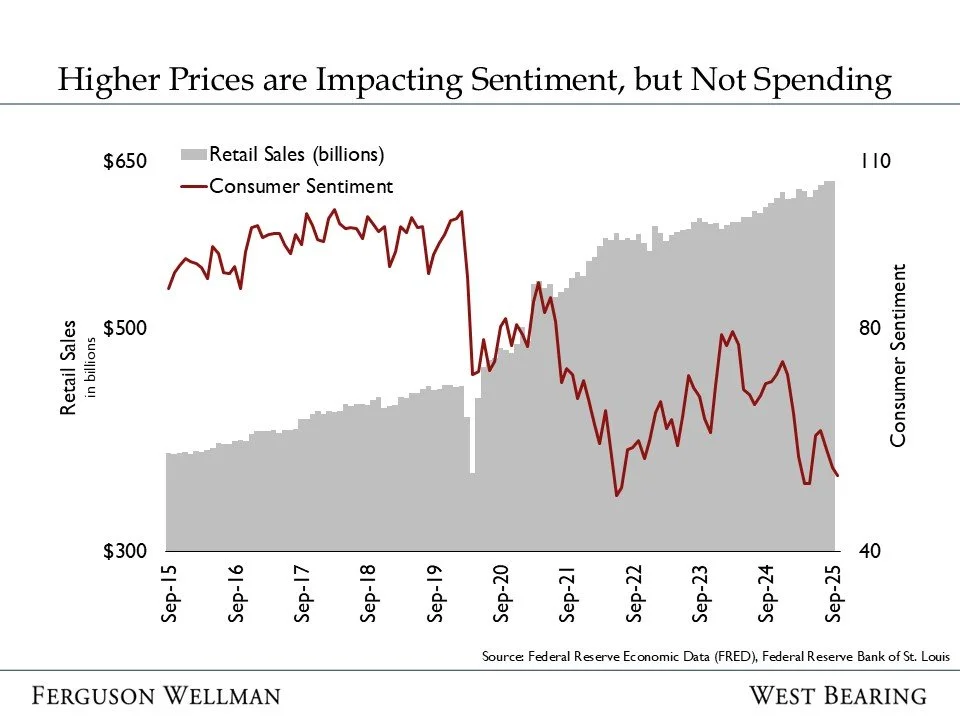
For consumers, the Fed’s position is top of mind, as many remain frustrated by high prices layered on years of post-pandemic inflation that have strained household budgets. Consumer spending remains active but uneven across income levels, with wealthier Americans, often supported by strong stock market gains, continuing to spend, while wage growth for lower-income households has lagged, leaving many struggling to cover everyday expenses. At the same time, households are navigating a fragile labor market, with sluggish hiring adding another layer of uncertainty to the economic outlook.
However, this year, Black Friday sales proved irresistible to many. U.S. consumers set a new online spending record on Black Friday, with $11.8 billion in e-commerce sales, marking roughly a 9% increase from last year. Shoppers were especially active between mid-morning and early afternoon, and more than half of the online purchases were made via mobile devices. Despite the shift away from traditional in-store traffic, which declined compared with previous years, shoppers are still deeply engaging with holiday promotions, using digital tools and targeted advertising to find deals.
Source: Federal Reserve Economic Data (FRED), Federal Reserve Bank of St. Louis
The record-setting online sales highlight a consumer base that remains engaged and adaptable, signaling resilience and confidence as shoppers navigate the holiday season.
This tension between what consumers are doing and how they are feeling will remain a critical indicator in the months ahead, offering insight not only into the durability of consumer behavior but also into the broader direction of the economy as we enter the new year.
Takeaways for the Week
The Federal Reserve lowered its benchmark interest rate by 0.25%, bringing the federal funds rate to 3.50%–3.75%
Technology and AI-related stocks faced headwinds, with notable declines from names like Oracle and Broadcom as investors weighed profit-margin concerns and sector valuations