

by Charissa Anderson, CFP®, CDFA®
Executive Vice President
Portfolio and Wealth Management
As the digital landscape evolves, so does the nature of cybercrime. For many, the term once evoked images of hackers breaking into computer systems and stealing data. While system breaches remain a threat, today cybercrime more often relies on manipulating people. Through impersonation, spoofed communications and AI-generated content, criminals trick individuals into authorizing fraudulent transactions themselves.
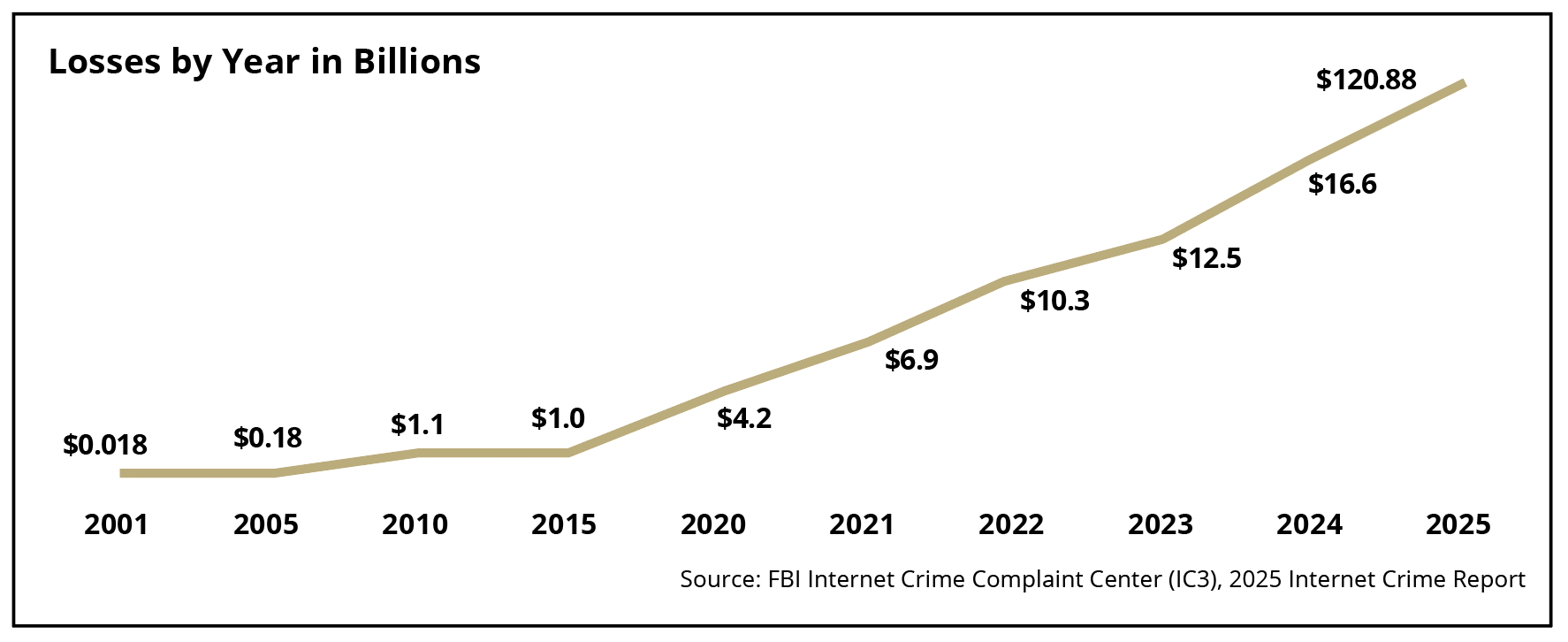
In 2025, reported cybercrime losses exceeded $20 billion, with the vast majority tied to cyber-enabled fraud rather than traditional hacking. Investment fraud was the largest single driver of those losses, followed by business email compromise. With both tactics relying on deception rather than system breaches, good individual judgment is just as important as secure systems.
Good habits remain the first line of defense. Independently verifying requests, maintaining strong passwords with multifactor authentication and pausing before acting on financial requests can significantly reduce exposure.
When preventative measures fail, cyber insurance can serve as a financial safety net. Coverage varies by policy but may include damages related to social engineering, identity theft, ransomware and data recovery. Policies can be added to an existing homeowner’s or commercial policy or purchased as a standalone product, with pricing dependent on coverage limits and scope.
Not all policies, however, cover the same risks. Social engineering losses may require specific endorsements, and some policies exclude coverage when human behavior contributes to the breach. Reading the fine print and adding the appropriate endorsements before a loss occurs can help avoid surprises during a claim.
Beyond financial protection, many policies provide access to forensic specialists, legal counsel and assistance coordinating with financial institutions and law enforcement. This support is often most valuable immediately after an incident, when decisions about containment and recovery need to happen quickly. Without it, individuals and organizations may be left navigating those steps alone, often with added cost.
The need for cyber insurance depends on existing safeguards, current coverage and where gaps exist. For high-net-worth individuals, complexity from multiple custodians, entities or staff can increase exposure and the likelihood of an uncovered risk.
Nonprofits face a different set of vulnerabilities. Organizations that handle donor data, online gifts and wire transfers are attractive targets. Impersonation of board members and finance staff is a particular risk in environments with multiple decision makers.
As cyber threats continue to evolve, so too should one’s approach to protection. Our team collaborates with insurance professionals to evaluate risk exposures as part of a client’s broader financial picture. Through Octavia Group, our private family office, clients have access to an annual insurance review to ensure coverage remains current as circumstances change.
Disclosures
The views expressed represent the opinion of Ferguson Wellman. The views are subject to change and are not intended as a forecast or guarantee of future results. This material is for informational purposes only. It does not constitute investment advice and is not intended as an endorsement of any specific investment. Statements of future expectations, estimates, projections and other forward-looking statements are based on available information and Ferguson Wellman’s views as of the time of these statements. Past performance may not be indicative of future results. Ferguson Wellman, Octavia Group and West Bearing do not provide tax, legal, insurance or medical advice. This material has been prepared for general educational purposes only and not as a substitute for qualified counsel who can determine how this information applies to you. We believe the information provided is from reliable sources but should not be assumed accurate or complete.
Please see additional disclosures.