

Jim Coats
Executive Vice President
Portfolio Management
The 2025 NACUBO-Commonfund Study of Endowments reveals a paradox facing colleges and universities: endowment portfolios are larger than ever, yet many institutions are becoming increasingly dependent on them to support day-to-day operations.
On the surface, the numbers are encouraging. Participating institutions in the study reported total endowment assets of $944 billion, a 7.5% increase from the prior year. Strong capital markets helped drive growth, with endowments earning an average 10.9% return in fiscal year 2025. Yet beneath this positive performance lies a more complex story.
One area of concern is fundraising. New gifts to endowments declined 9.2% year over year, marking the second decline in the last three years. Total new gifts fell from $15.4 billion to $14.0 billion, despite favorable economic conditions and strong capital markets. While it is too early to call this a long-term trend, gifts remain a critical source of endowment growth. Only time will tell if there is a structural change for development professionals.
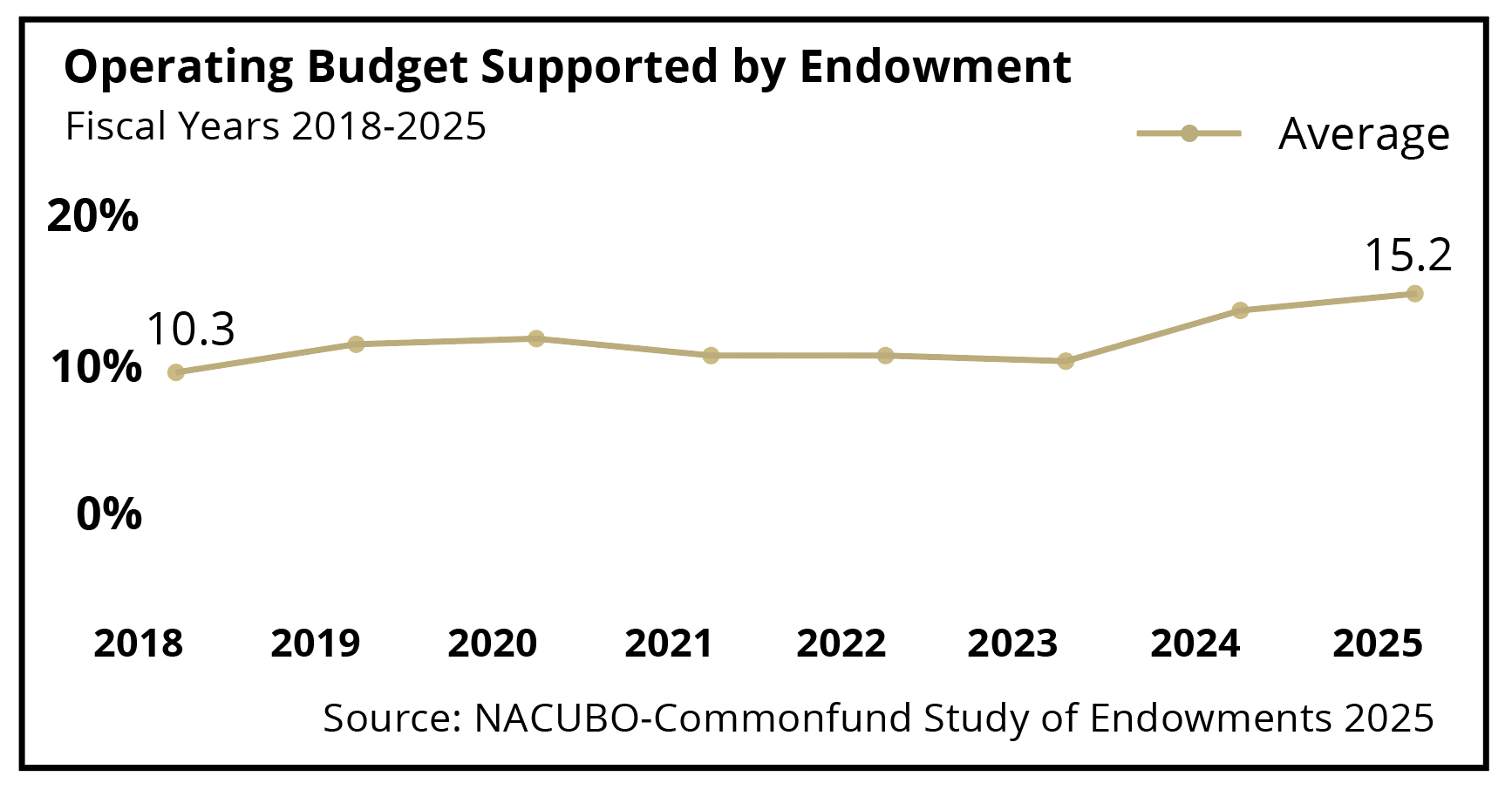
At the same time, institutions are drawing more heavily on endowments to fund operations. The study found that endowments supported an average 15.2% of operating budgets in fiscal year (FY) 2025—the highest level in the history of the survey. This compares with 14.0% in FY24 and just 10.9% in FY23. The increase is particularly notable among smaller institutions, which have rapidly expanded their reliance on endowment spending to cover operating needs.
This growing dependence raises questions about financial sustainability. Endowments are designed to support institutional missions in perpetuity, balancing current needs against future obligations. Higher spending today may limit flexibility tomorrow, especially if market returns moderate.
Compounding the challenge is inflation. The Higher Education Price Index (HEPI), which measures inflation specific to colleges and universities, rose 3.6% in FY25 and has averaged 3.8% annually over the past five years. HEPI has exceeded the Consumer Price Index in nine of the last 11 years, highlighting the persistent cost pressures facing higher education. Rising labor, technology and operating expenses are increasing demands on institutional budgets just as fundraising growth appears to be slowing.
Taken together, these trends suggest that higher education leaders face a delicate balancing act. Strong investment returns have provided institutions with valuable financial support, but declining growth from gifts, rising dependence on endowments to fund operating costs, and persistent inflationary pressures underscore the importance of prudent endowment management. The challenge ahead will be preserving long-term purchasing power while continuing to meet the immediate needs of students, faculty and institutional missions.
Disclosures
The views expressed represent the opinion of Ferguson Wellman. The views are subject to change and are not intended as a forecast or guarantee of future results. This material is for informational purposes only. It does not constitute investment advice and is not intended as an endorsement of any specific investment. Statements of future expectations, estimates, projections and other forward-looking statements are based on available information and Ferguson Wellman’s views as of the time of these statements. Past performance may not be indicative of future results. Ferguson Wellman, Octavia Group and West Bearing do not provide tax, legal, insurance or medical advice. This material has been prepared for general educational purposes only and not as a substitute for qualified counsel who can determine how this information applies to you. We believe the information provided is from reliable sources but should not be assumed accurate or complete.
Please see additional disclosures.