

Samantha Pahlow, CTFA, AWMA
Wealth Management Chair
When we think of estate planning, we often think of legal documents, trusts and tax strategies. Often, the most challenging aspect of creating a successful plan is the human element: your family’s unique dynamics. The good news is that many common conflicts are predictable and can be reduced with planning and clear communication.
Second Marriages
Blended families are common, and many include children from a prior marriage or relationship. U.S. Census Bureau data shows that over 20% of couples cohabitating in the U.S. have at least one partner with children from a prior marriage. These families may face competing interests between a spouse, stepchildren and children from a prior marriage. So, how do you address your spouse’s needs while providing for your children or other heirs over the long term?
One approach is a marital trust, often structured as a qualified terminable interest property (QTIP) trust. In plain terms, it can provide support for a surviving spouse during life while directing where remaining assets go at their death, including to your children.
It is also important to understand spousal rights under state laws. In many states, a surviving spouse may be entitled to a legally protected share of the estate, even if a will leaves everything to children from a prior marriage. The specifics vary by state and can depend on factors such as length of marriage, terms of any premarital agreements, how assets are titled and beneficiary designations.
Unequal Inheritance
Another frequent source of tension is when “fair” does not mean “equal.” Unequal inheritances can be appropriate for several legitimate reasons. The issue is rarely the math―it is what beneficiaries believe the decision means.
For example, splitting a family business between siblings may be impractical. Parents may wish to leave the business to the child most involved and use life insurance or other assets to balance inheritances for others. Thoughtful analysis and exit planning can reduce future disagreements over the transfer and valuation of the business.
If prior gifts or support are the motivation for unequal inheritance, speak with your attorney about how to track and document the intention to treat such gifts as advances on an inheritance.
Families may also consider an independent trustee, or co-trustee, which can reduce the perception that one sibling is exerting control in their own favor.
Protecting Vulnerable Beneficiaries
In some situations, direct inheritance may have unintended consequences. Leaving a sizable inheritance to a beneficiary who struggles to manage money or engages in high-risk behavior can increase the risk that assets are spent too quickly. Similarly, leaving assets outright to a person with disabilities may affect eligibility for certain government benefits.
Trust planning can help provide structure and protection. For beneficiaries who are likely to spend quickly, a spendthrift trust can limit direct access to principal, with an independent trustee overseeing assets and making distributions under guidelines set in the trust document.
For beneficiaries with certain disabilities, a properly drafted and administered special needs trust can allow a trustee to manage funds for supplemental needs while helping preserve eligibility for certain benefits.
Communicating the Rationale
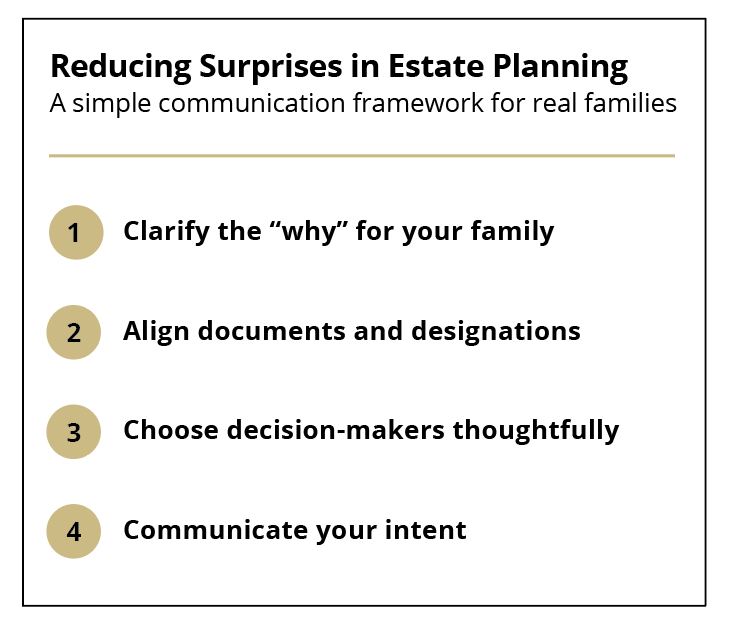
Even a well-designed plan can create tension if beneficiaries are surprised by it. Proactive communication during life can help reduce misunderstandings and create an opportunity to hear concerns and explain intentions in plain language.
That said, sharing details is not always appropriate. Family dynamics, privacy concerns or safety issues may make a full discussion unhelpful or even harmful. In those situations, it can be especially important to leave clear written context to be read with the estate plan, such as a letter of intent or other documentation explaining the rationale, how decisions were made and how the structure is intended to support each beneficiary fairly, even if not equally.
Working with a qualified estate planning attorney to anticipate the unique realities of your estate can reduce avoidable misunderstandings and give your family a plan they can live with.
Disclosure
The views expressed represent the opinion of Ferguson Wellman. The views are subject to change and are not intended as a forecast or guarantee of future results. This material is for informational purposes only. It does not constitute investment advice and is not intended as an endorsement of any specific investment. Statements of future expectations, estimates, projections and other forward-looking statements are based on available information and Ferguson Wellman’s views as of the time of these statements. Past performance may not be indicative of future results. Ferguson Wellman, Octavia Group and West Bearing do not provide tax, legal, insurance or medical advice. This material has been prepared for general educational purposes only and not as a substitute for qualified counsel who can determine how this information applies to you. We believe the information provided is from reliable sources but should not be assumed accurate or complete.
Please see additional disclosures.