
Are You Ready For Some Football?

Jason Norris of Ferguson Wellman by Jason Norris, CFA Executive Vice President of Research

Super Bowl Shuffle

With Super Bowl XLVIII due to kick off this Sunday, the results have historically had an impact on investors’ portfolio for that calendar year. This match up, for me, is a classic. Growing up in Boise, Idaho, most likely you were either a Seahawks fan or a Denver Broncos fan. From the late 1970s through the 1990s, both teams played in the AFC West and were archrivals. My allegiance always went to the Seahawks with great players like Steve Largent, Kurt Warner, Dave Krieg and David Hughes. And with Super Bowl XLVIII, my allegiance has not altered, and this would be beneficial for equity markets. Even though correlation does not lead to causation, historically, if a team from the NFC wins the big game, the S&P 500 is positive 80 percent of the time. Now that the Seahawks have made the move to the NFC, a win “may” portend a positive gain for equities.

While we are not big fans of seasonal and/or cyclical indicators, we do pay attention to them. With the S&P 500 down more than 3 percent for the month of January, history does not look good for the remainder of 2014. The returns in January usually predict what the returns will be for the entire year. Since 1950, this “January Barometer” has a completion percentage of 80 percent. While not perfect, it is an interesting factoid. Therefore, we should be cheering for the Seahawks to offset this calendar trend…

One final note on the subject: the Seattle Seahawks have been a great investment for owner and former Microsoft co-founder, Paul Allen. He bought the team in 1997 out of “civic duty,” and since then it has increased in value six-fold, while his Microsoft stake has merely doubled.

Down in a Hole

Global markets continue to be disheartened with events in emerging markets. Currency devaluations and higher interest rates are resulting in a “risk-off” trade for global investors. This sell-off has not been limited to just emerging markets. As we have seen here in the U.S., global developed markets felt the effects as well. The global markets (as measured by the MSCI All-World Index) are down five percent for the month of January. These risk-off trades have resulted in developed market interest rates declining meaningfully. The 10-year U.S. Treasury yield started 2014 at 3.00 percent; it is now trading at 2.65 percent. Yields in Germany and the UK have dropped by similar levels.

Due to this uncertainty, we are looking to reduce our emerging market exposure and allocate those funds into the UK, focusing on the consumer.

It’s Alright

While the January sell off is disappointing, we are still constructive on equities, especially developed market equities. This week we saw strong economic data in the U.S. regarding GDP and consumer spending even though consumer sentiment continues languish. Earnings for U.S. companies have been relatively healthy with 72 percent of companies having reported beating expectations. While we have seen some uncertainty in some parts of the earnings reports, specifically enterprise technology, we are still like the overall market. Specifically we increased our exposure to U.S. healthcare this week as we see the sector as offering great defensive/growth opportunities.

Takeaways for the Week

  • Even though we believe interest rates are going to trend higher, holding bonds in portfolio is still warranted
  • Developed market economies continue to improve, and while we are experiencing some volatility, we are still positive on U.S. equities

Why the Price of Tea in China Matters

Furgeson Wellman by Brad Houle, CFA Executive Vice President

One of the risk factors we highlight in our 2014 Capital Market Outlook is China's growth, which is slowing more than expected.  This week China's Purchasing Managers Index (PMI) was released.  A Purchasing Managers Index is an indicator of economic health.  PMI data is collected from various industries all over the world. PMI data is collected by analyzing five major indicators: new orders, inventory levels, production, supplier deliveries and the employment environment.1 The point of PMI is to indicate if an economy is accelerating or decelerating.  A number above 50 suggests improvement and a number below 50 suggests deceleration.  The latest PMI for China was 49.6 down .9 from the three month average of 50.3.  This is the fourth month in a row the Chinese PMI has declined.

Even with a decelerating economy China is expected to have Gross Domestic Product (GDP) growth between 6-7 percent.  China has been able to engineer a soft landing, managing GDP growth from 11 percent to the 6-7 percent level.  A soft landing is an expression for a decelerating economy that slows down without going into recession.  However, Chinese economic data is looked upon with some skepticism by market participants. Chinese GDP is reported in a way that is not consistent with how GDP data is reported in all the world's developed economies.  There is very little transparency in the numbers not to mention an unusual stability that might suggest certain components of the data are not completely factual.  In China there is a large underground cash economy that would be difficult to measure.

The China PMI news put a downdraft in the U.S. markets and caused some minor selling in other developed markets.  Other emerging markets also had a difficult week.  Argentina's peso declined the most in 12 years due to the cumulative effect of years of the Kirchner government’s economic mismanagement. Argentina has been challenged with uncontrolled inflation and a currency black market that has undermined the government’s efforts to regulate capital flows.  In addition, Turkey has been struggling with a political crisis that has undermined confidence and led to a large drop in the Turkish lira.

Earnings season is underway and according to FactSet Research, of the 53 companies of the S&P 500 that have reported fourth quarter 2013 earnings, 57 percent have reported earnings above the mean estimate.  The blended growth rate has been 5.9 percent with financials having the best growth rate and the energy sector having the lowest growth rate.

Our Takeaways for the Week:

  • The strength of the Chinese economy is top of mind for investors and will continue to be impactful to developed and emerging markets

1Source: Investopedia

Disclosures

Investment Outlook Video: First Quarter 2014

We are pleased to present our Investment OutlookFirst Quarter 2014 video titled, “Removing the Training Wheels.” This quarter, Chief Investment Officer George Hosfield, CFA, discusses how the Fed will approach tapering of quantitative easing and what we believe will occur in the economy, particularly in regards to the unemployment rate, interest rates and stock market return expectations.

To view our Investment Outlook, please click here or on the image below.

jpeg of Q1 2014 Outlook video for email hyperlink

Oregon Business Magazine Names Ferguson Wellman a Top Financial Manager/Planner in its 2014 Power Book

PORTLAND, Ore. – January 15, 2014 – Ferguson Wellman Capital Management is pleased to announce that the firm has been named by Oregon Business Magazine as a top financial planner/manager in their annual Power Book publication. Oregon Business Magazine ranked Ferguson Wellman second in the state on their list of 27 financial service companies. The listing was created by calculating the total number of assets under management, in Oregon and in total.

“We are very flattered by this honor, but feel most satisfied that we have our clients’ confidence and trust. That is truly paramount to us,” said Jim Rudd, chief executive officer.

Founded in 1975, Ferguson Wellman Capital Management is a privately owned investment advisory firm, established in the Pacific Northwest. With more than 651 clients, the firm manages $3.8 billion in assets that comprise union and corporate retirement plans; endowments and foundations; and individuals. In 2013, Ferguson Wellman created a new division, called West Bearing Investments, that servers emerging and established wealth. Minimum account sizes: $3 million for Ferguson Wellman; $750,000 for West Bearing Investments. (as of 12/31/13)

###

Off to the Races

by Shawn Narancich, CFA
Executive Vice President of Research

 Ohhh, the Weather Outside Is Frightful

Rubber hit the road this week for investors as traders and money managers returned to work after what for many turned out to be a nice two week break. Stocks appear to be consolidating gains realized over Christmas and New Year’s, with a plurality of economic data pointing to faster U.S. growth in 2014. A fly in the ointment was this morning’s December employment report which showed the economy producing just 74,000 jobs - albeit in a month where bad weather seems to have had a disproportionately negative impact on the headline number. Nevertheless, if one excludes construction job losses and cases where people were counted as unemployed because they couldn’t get to work, the job numbers still fell short of estimates. And while the unemployment rate dropped to 6.7 percent, it fell primarily because more of the jobless gave up hunting for work. Indeed, as we look back to year-end, the labor force participation rate has fallen to a new cyclical low of 62.8 percent - that is the percentage of “employable” people either with a job or looking for work.

Gaining Momentum

Will one month of relatively poor employment data dissuade the Fed from its planned tapering of QE? We doubt it. Q4 retail sales picked up, the renaissance of U.S. manufacturing and energy is going full steam ahead, and capital spending by companies flush with cash appears on the verge of inflecting upward. In related fashion, this week’s monthly trade data was bullish. The November report showed U.S. imports exceeding exports by a four-year low of $34 billion. Increasingly positive trade flows are being driven by two key trends: rapidly falling oil imports resulting from new domestic production and surging exports of gasoline and diesel being refined from the crude. As a result of these encouraging trends, GDP growth estimates for the fourth quarter are being revised upward, and for the first time in recent memory, the U.S. economy may have grown in excess of 3 percent for two consecutive quarters. With fiscal headwinds waning, 2014 is shaping up to be a year of faster economic growth domestically.

The Dawn of Another Earnings Season

Alcoa unofficially kicked off the fourth quarter reporting season by reporting weaker than expected profits that left investors disappointed and shareholders with lighter pockets. Other early reports from seed and herbicide producer Monsanto, US beverage producer Constellation Brands and chipmaker Micron were more encouraging, and each of these cases resulted in nice stock price gains afterward. Overall, investors are expecting blue chip earnings growth of 6 percent for Q4, on flat revenues. These estimates could prove conservative if fourth quarter GDP growth was as strong as the 3 percent rate we expect. Next week, several big banks including JP Morgan and Citigroup will come to the earnings confessional, as well as industrial conglomerate General Electric. Let the fun begin!

Our Takeaways from the Week

  • Stocks are taking a breather, consolidating some of their heady 2013 gains
  • Despite a hiccup in the monthly employment report, the U.S. economy appears to be gaining steam

Disclosures

Is an All Cash Emergency Fund Strategy Appropriate for All Investors?

Is an All Cash Emergency Fund Strategy Appropriate for All Investors?

Josh Frankel, CRPC, shares views from Journal of Financial Planning regarding emergency funds. 

Ferguson Wellman Capital Management Ranked as a Top Western Adviser

Ferguson Wellman Capital Management Ranked as Top Western Adviser

PORTLAND, Ore. – December 23, 2013 – Ferguson Wellman Capital Management has recently been named by InvestmentNews as a top adviser company in the Western United States.

InvestmentNews ranked Ferguson Wellman 10th on their list of 15 registered investment advisors in the west. Ferguson Wellman is the only firm from Oregon to be named and the largest in the Pacific Northwest on their list. The ranking was calculated by total assets under management, with Ferguson Wellman at $3.2 billion in assets under management at the time of their survey, which was November of 2013.

“While it is always gratifying to be ranked highly among your peers – what is most meaningful to us is earning the trust and confidence of our clients. We work hard at doing that every day,” said Jim Rudd, chief executive officer.

Founded in 1975, Ferguson Wellman Capital Management is a privately owned investment advisory firm, established in the Pacific Northwest. With more than 600 clients, the firm manages $3.8 billion in assets that comprise union and corporate retirement plans; endowments and foundations; and individuals. Minimum account size: $3 million. (as of 12/31/13)

###

Methodology InvestmentNews qualified firms headquartered in the United States based on ADV data reported to the Securities and Exchange Commission as of Nov. 1. To qualify, firms must have met the following criteria: (1) latest ADV filing data is either on or after Jan. 1, (2) total AUM is at least $100M, and (3) does not have employees who are registered representatives of a broker-dealer, (4) provided investment advisory services to clients during its most recently completed fiscal year, (5) no more than 50% of regulatory AUM is attributable to pooled investment vehicles (other than investment companies), (6) no more than 25% of regulatory AUM is attributable to pension and profit-sharing plans (but not the plan participants), (7) no more than 25% of regulatory AUM is attributable to corporations or other businesses, (8) does not receive commissions, (9) provides financial planning services, (10) is not actively engaged in business as a broker-dealer (registered or unregistered), or as a registered representative of a broker-dealer, (11) has neither a related person who is a broker-dealer/municipal securities dealer/government securities broker or dealer (registered or unregistered), nor one who is an insurance company or agency, (12) the state in which financial advisory business is conducted is one of the following: AK, AZ, CA, CO, HI, ID, MT, NM, NV, OR, UT, WA, or WY.

Source: InvestmentNews Data

Reeling in the New Year

Jason Norris of Ferguson Wellman by Jason Norris, CFA Senior Vice President of Research

With 2013 coming to a close, one of the most frequent questions we have received is, “What’s the encore?”  The S&P 500 rose over 32 percent, the best return since 1997. Will 2014 result in profit taking or will there be continued follow through as investors deploy their cash?

A year ago, investors were looking at a lot of uncertainty with the pending government sequestration, increasing taxes (as you recall, the payroll tax was increased to 6.2 percent), as well as international questions with Europe and a possible slowdown in China. Those fears, at least by market perception, were put to bed as the Federal Reserve continued to hold interest rates down with their bond buying program. As the U.S. economy showed steady gains and the Fed signaled the end to quantitative easing, investors chased stocks higher and exited bond positions. In the last six months of 2013, over $175 billion left bond mutual funds but only $75 billion found its way into equity funds. We believe there is still a lot of cash to be deployed in 2014.

Against the Wind

2014 will be the advent of the Janet Yellen tenure at the Fed, a mid-term election, as well as the conclusion of QE3. We continue see slow improvement in economic data for the U.S. economy. Unemployment claims are trending lower (after a volatile month due to the holidays). Manufacturing data remains healthy, as reflected by this week’s PMI reading of 57 (a score of 50 or above signals strength). The U.S. consumer remained engaged into the end of the year as retail sales rose over four percent (primarily driven by double digit on line sales growth). Finally, the housing market is improving with prices rising and inventories falling.

What could derail the expansion? Rising rates. As the Fed unwinds its bond buying, we believe rates will continue to trend higher. Will these higher rates be a meaningful headwind to growth and equity returns? We don’t believe so. However, we will be monitoring closely.

Back for More

This brings us back to the first question: what does 2014 have in store after such a strong 2013? Looking at historic returns, equities revert to their averages. Since 1928, there have been 17 periods when stocks returned over 30 percent. The following year, equities averaged an 11 percent return and were positive two-thirds of the time (in line with historic annual returns). Therefore, this year, equity returns are going to be contingent on corporate profit growth and market valuation, which we believe are both constructive.

We hope you all have a healthy and prosperous 2014 and we look forward to seeing our clients and friends at one of our many Investment Outlook presentations over the next six weeks.

Our Takeaways for the Week:

  • The retail investor remains skeptical of equities
  • The U.S. economy continues to show steady improvement

Deidra Krys-Rusoff Quoted in Bloomberg Business News

Bloomberg Business Week Detroit Pension Proposal Would Shut Out New Hires

September 27, 2013

By Corey Williams

Hoping to stanch some of the red ink flowing from Detroit, its emergency manager is riling the workforce with a proposal to close the city's pension plans to new employees by the end of the year and move the city to a 401(k)-style system that has become the norm in the private sector.

Detroit's underfunded obligations of about $3.5 billion for pensions and $5.7 billion for retiree health coverage are part of the city's $18 billion debt load and a major reason emergency manager Kevyn Orr filed for bankruptcy protection in July.

Now, he wants to end pensions for new employees and freeze benefits to about 18,000 members. Non-taxable annuity savings will be closed to new employees and no future contributions would be accepted after Orr's proposed Dec. 31 "freeze date."

Non-vested active system members also will be frozen out by Dec. 31.

"They took my wages and now they're trying to take my pension," said Mike Mulholland, vice president of American Federation of State, City and Municipal Employees. "All of our people are saying 'what are they doing to us?'

"We've already given concession after concession, and now to be asked to give up more and be put in a defined contribution plan ... they want to force us to take something where we have no security when we retire."

Orr's pension plan has to be approved by Michigan Treasurer Andy Dillon and is one of the strongest challenges to unions in the one-time organized labor stronghold.

It also is likely to continue the parade of court challenges by union leaders who say changes to pensions and bargained health care benefits violate Michigan's Constitution.

But Orr counters that federal bankruptcy law trumps state law.

James McTevia, a Detroit-area turnaround expert, said he is not aware of a previous ruling on the matter, but adds it's clear what Orr is trying to do.

"He is following the natural process for a reorganization," said McTevia, of McTevia and Associates. "That sets up a mechanism to make changes to the entity's debt structure. If the city doesn't have the money to pay (into the pensions), what difference does the law make? If the city can't do it, it can't do it. That contract has to be rejected and another contract has to be entered into."

A draft of the pension proposal was given last week to the General Retirement System, which represents about 20,500 active and retired city workers. AFSCME Council 25 spokesman Ed McNeil said unions have not received the draft.

In it, the city also would contribute five percent of the base pay of non-uniformed workers to the 401-type pension plan.

Overtime, bonuses and longevity pay will not be factored into compensation as they have been in the past. The city will make no contributions to a deferred compensation plan in which participant contributions and earnings on retirement money are tax-deferred.

A separate plan for police and fire retirees still is being worked on and has not been presented to that pension system, said Bill Nowling, a spokesman for Orr.

"But it will be similar" to the General Retirement System plan, Nowling said.

The police and fire system has nearly 12,700 members.

The pension systems, city unions and individual retirees are fighting Orr in bankruptcy court. They don't believe he has proved Detroit is insolvent and complain that he hasn't bargained in good faith.

Mary Estell, a retired Department of Public Works employee, receives a pension of about $2,300 per month after 32 years with the city. She realizes the likelihood of getting more is unlikely.

"At this point, there is nothing we can do," Estell said of Orr's pension plan. "The city doesn't have any money, so we won't get any increase. If the bankruptcy doesn't go through, then maybe there's a chance we will get an increase in the future."

Orr's plan does not say how much would be saved, according to a draft of the proposal.

A spokeswoman for the pension system says officials still are studying the plan. "It really just caught us completely off guard," said Tina Bassett. "It was the first time we saw it."

But any changes could take as long as two decades to make a dent in how Detroit's long-term debt is structured, according to Michael Sweet, a bankruptcy attorney with Fox-Rothschild.

Moving from a defined benefit to a defined contribution plan "isn't going to change the savings tomorrow," Sweet said.

"Kevyn Orr is working on all sorts of different things. One is to address the short term issues and deal with the longer term imbalance of the budget."

Private companies long ago starting shedding plans that relied heavily on employer contributions in favor of those where workers decide how much of their pay they want socked away. As cities and states continue to buckle under the pension and health care liabilities, elected leaders are pushing for similar changes.

"Something has to be done because the pensions are extremely expensive and with the aging demographic, those costs just keep going up," said Deidra Krys-Rusoff, a portfolio manager with Ferguson Wellman, an Oregon-based capital management firm.

Christmas Comes Early … and Late

RalphCole_032_web_ by Ralph Cole, CFA Executive Vice President of Research

Melt with You

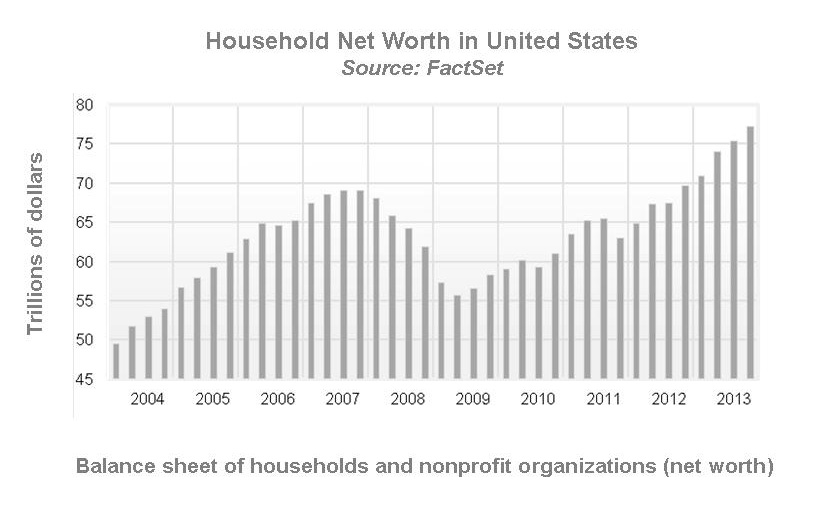
It feels like the market is melting up these days as stocks continued their year-long rise during the shortened holiday week. Investors continue to be heartened by positive economic data signaling stronger growth as we enter 2014. Durable goods orders were up 3.5 percent in November with automobiles, airplanes and refrigerators helping drive end demand. Also, new home sales remain robust with record-setting sale prices. Both of these data points hit on some important topics for our 2014 Investment Outlook.  Specifically, we think demand for capital equipment will finally accelerate in 2014 due to underinvestment and substantial cash balances on corporate and consumer balance sheets. Furthermore, consumers are increasing their spending as a result of the “wealth effect” that has been fueled by increased home and stock prices.

Household_NW

Crosstown Traffic

Our investment team has been writing for some time about the shift to online shopping and this trend came to a head this week for Amazon and UPS.  For those of us who like to start shopping closer to Christmas, Amazon Prime© seems like the perfect solution.  For an annual fee of $79.00, Amazon provides two-day free shipping on most merchandise. We don’t think anyone is surprised to learn that we live in an era of procrastinating techno-geeks who wait until the last minute to ship gifts. This time, the sheer volume of orders overwhelmed both Amazon and UPS. Though UPS has not stated how many packages were affected, the number seems to be in the hundreds of thousands. While both Amazon and UPS are doing what they can to satisfy customers, the real story is the volume shift to cyberspace. Amazon signed up over 1 million additional Prime© customers in the third week of Christmas alone. This is a nice development for Amazon because these shoppers tend to spend twice as much in a given year as those who don’t have Amazon Prime©.

Our Takeaways for the Week

  • Christmas week was just another reason for investors to keep bidding up stock prices
  • Interest rates continue to move slowly higher on Fed taper talk

Disclosures

The Birth of the Fed

Lori Flexer, Ferguson/Wellman Posted by Lori Flexer, CFA Executive Vice President 

100 years ago today, the Federal Reserve was formed. NPR's Planet Money shares the fascinating beginnings of this important institution. Click here for the full story.

Note: Clicking on this link will take you to a third-party website. The information provided by this site is not endorsed or guaranteed by Ferguson Wellman. Disclosures

Early Christmas Gifts

by Shawn Narancich, CFA Executive Vice President of Research

Early Christmas Gifts

In what turned out to be a surprisingly action-packed week before Christmas, the markets finally shook off the shackles of worry concerning what would happen when the Fed began tapering its program of quantitative easing (QE). Bernanke proved that he’s no lame duck chairman and investors learned that stocks can still go up despite a slightly less accommodative Fed. In reducing monthly purchases of Treasury and mortgage-backed bonds by $10 billion per month, our central bank is acknowledging a slowly improving labor market and an expanding economy that is being boosted by several key drivers: a renaissance in U.S. energy production and manufacturing and, increasingly, the wealth effect of rising house and stock prices that is giving a nice lift to consumer spending. Looking ahead, we expect incoming Fed Chair Janet Yellen to continue what Bernanke started. Our view is that further reductions to QE will be commensurate with continued improvement in labor markets, subject as always to the Fed’s other key mandate—keeping inflation low.

Always a Bear Market Somewhere

In stark contrast to stock prices that are once again setting new highs, gold prices have fallen substantially. After attracting increasing amounts of attention as a hedge against monetary dislocation and unchecked growth in the money supply, gold is increasingly being abandoned by investors now more attracted to robust stock market returns and, for those with a lower risk tolerance, bonds that are now offering real rates of return. From its high in August 2011, gold is now down 36 percent. It may be pretty to look at, but with the Fed now in the early stages of unwinding QE, it has lost its shine.

Blue Burner

Sticking to the commodity theme, one key source of energy whose price is going the opposite direction is natural gas. Much maligned by investors because of its seeming ubiquity, the front-month contract is up 31 percent since August. Cold weather has boosted the demand for natural gas, one of the nation’s most common sources of home heating. Weather vicissitudes aside, we like the longer-term demand case for the cleaner burning fuel to take market share of electricity generation from its dirtier cousin coal. Will gas currently priced for $4.40 per-million-BTUs go to $5.50? In the short-term, probably not, because the prolific shale fields in Pennsylvania, Wyoming and Texas will induce considerably more production if prices continue to rise.

Nevertheless, key suppliers can make a lot of money with natural gas prices in the $4.00 to $5.00 range. More importantly, our economy should increasingly benefit from using low cost natural gas and natural gas liquids to generate cheaper power and manufacture plastics. In the latter case, low cost ethane, propane and butane feedstocks are displacing oil-based naptha, incenting major chemical companies like Dow and the petrochemical arm of Shell to locate plastic manufacturing facilities stateside. The beneficial result for America is new jobs, additional exports, and healthier levels of GDP growth.

In this festive season, we wish all our friends and clients a Merry Christmas and a very happy and healthy new year.

Our Takeaways from the Week

  • Investors took the start of Fed tapering in stride, as stocks rallied to new highs
  • A continued flow of encouraging economic data points to faster GDP growth in 2014

Disclosures

Oregon Jewish Life Magazine Writes Article About West Bearing Investments

Josh Frankel Takes West Bearing by the Horns Oregon Jewish Life Magazine

By Deborah Moon

December 2013

Since 1975 Ferguson Wellman Capital Management has managed investment accounts for clients who have portfolios of at least $2 million, a level that has caused them to turn away many prospective clients and then compete for those same investors a few years down the road.

Now Josh Frankel has joined the firm to lead West Bearing Investments; this new division of Ferguson Wellman caters to clients with $750,000 or more in their investment portfolios. By Sept. 30, the new firm had $25 million in assets under management – a goal they didn’t foresee reaching until the end of the year.

“We are a boutique agency with $3.6 billion in assets under management,” says Mary A. Faulkner, Ferguson Wellman vice president in charge of communications. She says the firm decided on a growth strategy to enable them to start relationships with clients earlier in their investment journey.

Josh says he grew up in a traditional Jewish family in a large Jewish community in Los Angeles before attending the University of Oregon, where he was a field goal kicker for the Ducks and discovered Hillel. “For the next several years, folks at Hillel were a big part of my Jewish experience in college and are still some of my greatest friends today,” he says. Now he is the board president of the Greater Portland Hillel. Josh has also served on numerous boards and committees in the Jewish community including B’nai B’rith Camp, Oregon Jewish Community Foundation, Cedar Sinai Park and Mittleman Jewish Community Center. He co-chaired the Jewish Federation of Greater Portland campaign kickoff event in 2011. Since Ferguson Wellman encourages all employees to take leadership roles on boards they feel passionate about, it’s not surprising that Josh met some of his future co-workers while serving on a board.

“They called me in May to talk about this new venture,” says Josh. “I’m such a community-driven person that working for a local, employee-owned company seems too good to be true.” About 90% of employees are stakeholders in the firm, which may help account for the fact that no portfolio manager has left the firm in the past 24 years. “He interviewed with about 18 people,” says Faulkner. “He was one of our first unanimous hires. … We wanted someone who understood our culture. Of all those we interviewed, Josh asked the most questions about the client experience, and that really stood out for us.”

Ferguson Wellman CEO Jim Rudd agrees. “Josh fits hand in glove with the professional people we have in the company. He has clients’ best interests first and foremost. And he has a network … Josh Frankel’s name is well known,” says Rudd. West Bearing, like Ferguson Wellman, will focus on long-term relationships with clients. “Consistency, reliability and continuity are more than words, they are our bedrock,” says Rudd. After he was hired as senior vice president and portfolio manager in July, Josh recruited Jorge Chavarria, with whom he had worked at Merrill Lynch, to join him at West Bearing. The two serve as portfolio managers who can draw on the full resources of Ferguson Wellman. “We never wanted West Bearing to feel like Ferguson Wellman Lite,” says Faulkner, who added the division was created to serve new clients. “We have some clients who have drawn down their assets (in retirement). We won’t move them over to West Bearing. This is to start new relationships.”

She adds that West Bearing will have access to all of Ferguson Wellman’s analysts and other resources. “It’s all under one roof. This is his team he is working with,” she says. And it is an impressive team. This year Forbes named Ferguson Wellman Capital Management 40th in the “RIA Giants” category of the Top Fifty Wealth Managers list. The data for the rankings are provided by Registered Investment Advisors Database and are based on the total discretionary assets under management.

“My goal is to help people understand their goals, put together a game plan and monitor that plan over time,” says Josh. Faulkner says she is also impressed by Josh’s devotion to his family. “His spouse is a doctor, so Josh has equal responsibility.” In 2008 Josh and his wife, Amy, moved to Portland for Amy’s residency at OHSU. Dr. Amy Swerdlin Frankel is a board-certified dermatologist with the Providence Medical Group. Their son, Ethan, is 14 months old. Josh says their dog Rocky, a Labradoodle, bears a striking resemblance to West Bearing’s logo – an American bison. The division’s name and logo were chosen to serve as an inspiration for West Bearing. The company literature explains: “Most animals in the West attempt to outrun inclement weather, prolonging their exposure to the elements and weakening their condition. Bison instinctively turn to face the storm. By bearing west, they successfully find the quickest path to clear skies.

Ferguson Wellman Capital Management Recognized as One of Portland Business Journal’s Most Admired Companies

Ferguson Wellman Capital Management is pleased to announce that the firm has been named by the Portland Business Journal as one of the Most Admired Companies. Of the 10 financial services companies listed, the firm was ranked third, with Umpqua Bank being first place. There were a total of 151 companies nominated in the financial services category. Ferguson Wellman was also voted 18th across all categories. This is the ninth consecutive year that the company has made this exclusive list. The list is compiled by surveying over 3,000 CEOs across the state of Oregon and southwest Washington. The CEOs were asked to select two companies they most admired in eight industries. They were also asked to rate the two companies they selected in each category on the following attributes: (1) innovation (2) quality of services or products (3) community involvement and (4) quality of management and (5) branding and marketing.

“We were honored to have been selected, along with many other companies that we respect and admire throughout the state,” said Steve Holwerda, CFA, chief operating officer and principal.

Founded in 1975, Ferguson Wellman Capital Management is a privately owned investment advisory firm, established in the Pacific Northwest. With more than 600 clients, the firm manages $3.6 billion in assets that comprise union and corporate retirement plans; endowments and foundations; and individuals. (as of 9/30/13)

Black Friday Magic

Jason Norris of Ferguson Wellman by Jason Norris, CFA Senior Vice President of Research

Good Mourning Black Friday, Welcome Cyber Monday

Black Friday shopping numbers were not much to write home about, but it is uncertain if it is the state of the consumer or the “expansion” of Thanksgiving weekend specials to the day of turkey day or even before. Thirty-three percent of “Black Friday” shopping occurred on Thursday, up from 13 percent in 2011. Over the entire weekend, traffic remained healthy; however, sales were a bit below expectations (up 2.3 percent) and would have been negative if not for 15 percent growth in online sales over the weekend. The weakness was most notable in the Northeast.

The other phenomenon is the growth of Cyber Monday. Online sales that day (the Monday following Thanksgiving weekend) were up over 19 percent and are projected to be up 15 percent this holiday season. Online sales will account for 14 percent of the $600 billion expected to be spent this season. While Amazon.com continues to be the main beneficiary of this trend, valuation metrics can’t get us excited about the stock, but as consumers we continue to benefit.

Learning to Fly

Speaking of Amazon, its CEO Jeff Bezos was interviewed on 60 Minutes and pulled off a great publicity stunt to keep the e-commerce retailer in the news all week. If you haven’t already heard, Mr. Bezos announced that Amazon was looking at using unmanned drones to deliver packages. While Amazon has a reputation of being a visionary and willing to invest in growth, the near-term applications of this announcement seem more or less PR rather than delivery. We just hope it doesn’t get to the point where our kids can’t enjoy the snow during the holidays because they will have to be avoiding all the Amazon package deliveries from the sky.

Detroit Rock City

Looks like we are witnessing a slow motion car accident with the approval of a federal bankruptcy filing by the city of Detroit. Deidra Krys-Rusoff, Ferguson Wellman’s municipal bond analyst and portfolio manager, believes that with U.S. Bankruptcy Judge Steven Rhodes ruling that Detroit is eligible to file for bankruptcy protection it may permit them to emerge from $18 billion of debt. This ruling grants the city the power to establish a financial plan which will allow the city to provide public services while meeting adjusted debt obligations. Judge Rhodes also ruled that pensions may be adjusted under federal bankruptcy, despite the fact that Michigan’s constitution does not allow for cuts to established pension obligations. This ruling may permit the trimming of pensions and retirement benefits, taking away the “protected” status usually afforded to the plans and placing them on an equal platform to other creditors (such as bondholders).  We expect unions to fully challenge this decision, and the local union has already filed an appeal.

We believe that this event is isolated and should not have an overarching effect on the muni market. Any way you look at it though, this may end the same way as the 1976 classic song at some parties.

Stagefright

This week was the 17th anniversary of FED Chairman Greenspan’s “irrational exuberance” speech, and investors are anxious for what to expect in 2014 after a 25 percent+ move in equities this year. While this week we have seen some weakness in stocks as rates have risen, we still don’t foresee a major sell off. Putting history in context, in the bull market run from 1990 through 1996, equities DID NOT have a 10 percent correction, and we didn’t peak until March 2000. We are not saying that history will repeat itself, but with the U.S. economy improving and inflation remaining tepid, we would be buyers of equities on any major pullback.

Our Takeaways for the Week:

  • Even though stocks have run, we are still constructive on equities
  • Any weakness in the municipal bond market should be seen as a buying opportunity for quality muni bonds.

West Bearing Investments Continues to Thrive

West Bearing Investments Continues to Thrive

Ferguson Wellman Capital Management is pleased to share the growth of West Bearing Investments, a division of Ferguson Wellman. After only five months in operation, West Bearing has reached the 2013 target for assets under management with $25 million. Many sources for these clients have been referrals from Ferguson Wellman clients and employees, accountants, attorneys and referrals from our friends at Charles Schwab and Umpqua Private Bank.

West Bearing Investments quietly launched in July 2013 after a year of internal exploration of a new growth strategy. The division was formally announced in the fall of 2013. West Bearing Investments was inspired by the opportunity to broaden client relationships and help individuals and institutions navigate through many important planning and financial decisions earlier. West Bearing serves clients with a minimum of $750,000 in investable assets and benefits from the investment principles, structure and expertise of Ferguson Wellman.

The West Bearing team is led by Josh Frankel, CRPC©, senior vice president. Frankel brings a range of professional experiences that enable him to provide a high level of client service and guidance on investment management and planning. Also part of the West Bearing team is Jorge Chavarria, who has over 10 years of client service experience in the financial industry and proactively guides clients and their portfolio managers toward best practices that foster strong relationships.

Founded in 1975, Ferguson Wellman Capital Management is a privately owned investment advisory firm, established in the Pacific Northwest. With more than 600 clients, the firm manages $3.6 billion in assets that comprise union and corporate retirement plans; endowments and foundations; and individuals. Minimum account size: $2 million. (as of 9/30/13)

Giving Thanks

by Shawn Narancich, CFA Senior Vice President of Research

Early Christmas Gifts

Another week, another record close. With both the S&P 500 Index and Dow Industrials breaking into new record territory, equity investors have much to be thankful for as they celebrated the Thanksgiving holiday and began to ponder full year returns that are shaping up to be the best in fifteen years. Trading volumes slowed to a crawl in typical holiday week fashion, with fewer investors around to digest a relatively light slate of news flow.

A Quiet Time

Those manning their desks were left to digest new housing data that showed a drop-off in October pending home sales juxtaposed against another strong Case-Schiller report, which showed house prices nationally up over 13 percent in September. For us, the tie-breaker was new residential housing permits for October, which rose 6.6 percent sequentially, to annualized levels exceeding one million units. While new apartment complexes drove the gains, permitting for single-family homes also rose, an encouraging development given the political upheaval that occurred last month. Housing has been a key driver of the U.S. expansion to date, and remains vital to our expectations for economic growth next year. In turn, interest rates on the 10-year Treasury are a key input to setting mortgage rates. As such, the Fed is paying close attention to them as it considers its next move. Tapering QE too soon or too quickly could spook bond investors, causing prices to fall and mortgage rates to rise. With housing data more mixed recently, this is the type of outcome the Fed is attempting to avoid, and a key reason why we think policy makers will err on the dovish side.

Black Friday (Thursday?)

Whether Santa Claus will deliver a Christmas bounty or a lump of coal to retailers is yet to be seen, but judging by the overflowing crowds seen at key shopping venues like Wal-Mart and Best Buy, shoppers’ enthusiasm for a deal is as strong as ever, incenting some to venture out as early as Thanksgiving Day. Estimates for holiday sales growth seem to be settling out around the 3-4 percent level, but the question as always for retailing investors is the price at which those sales transact. In addition to the level of sales growth, investors will attempt to discern the profitability of those sales, and the underlying gross margin data does not typically arrive until retailers report their financial results in late February. As indicated in last week’s web log, we believe the best success will be had by those focused on either the high-end or low-end, with general merchandisers like Kohl’s and Target caught betwixt and between.

That said, we bid our readers happy shopping on this Black Friday, so named for the day’s typically heavy selling pace that can swing retailers from losses to profits for the year. Moreover, we wish our clients and friends a peaceful and most enjoyable holiday season!

Our Takeaways from the Week

  • Amid low trading volumes, stocks scaled new heights in a holiday shortened week
  • Retailers are in the spotlight as the Christmas selling season begins

Disclosures

Gaining Elevation

by Shawn Narancich, CFA Senior Vice President of Research

Dow 16,000

A slow growth, low inflation environment that continues to enable highly accommodative monetary policy remains a recipe for stock market success. With year-to-date gains now topping 25 percent on the S&P 500, the venerable Dow surpassed another 1,000 point threshold as key equity benchmarks forge further into record territory. With retailers book-ending third quarter earnings season this week, investor attention is being redirected back to the global economy, where key U.S. reports continue to indicate the possibility but not likely the probability that the Fed will begin tapering its program of quantitative easing before year-end. Domestic inflation decelerated for the third consecutive month in October, to an annual rate of 1.0 percent not seen since deflation beset the economy in 2009. With next to no wage pressure and a domestic energy boom keeping natural gas and oil prices well contained, incoming Fed Chair Janet Yellen can afford to be patient. Will Ben Bernanke presiding over his next-to-last FOMC meeting next month steal her thunder? Barring a surprisingly strong November jobs report, probably not. Those betting on an early taper would point to last month’s better than expected payroll gains and this week’s surprisingly strong retail sales report, in which strong auto sales, restaurant spending, and furniture sales drove better-than-expected 3.9 percent growth.

Crystal Clear

While retail sales were surprisingly robust in an October disadvantaged by the partial government shutdown, investors are clearly witnessing a case in which a rising tide is not lifting all boats. In the plus column is Home Depot, which posted U.S. same-store sales exceeding 8 percent for its fiscal third quarter. For a retailer with $80 billion of yearly sales, such growth is impressive and speaks to where consumers are spending – on durable goods like washing machines and new carpet for a typical house that now has home equity. Where consumers are not spending as much is in categories like apparel and center aisle grocery, negatively impacting the likes of Target and packaged food companies Campbell Soup and JM Smucker. In contrast to another beat-and-raise quarter from Depot, each of the aforementioned fell short of investor expectations, with the stocks being summarily punished.

Winners and Losers

In an environment of muted wage gains and still elevated unemployment, consumers are increasingly price sensitive, but in contrast to past economic cycles, technology has enabled them to be smarter shoppers. Armed with smart phones able to compare prices across retailers and internet sites at the touch of an app, bricks-and-mortar retailers like Best Buy are having to offer price matching (think deals on Amazon) to keep up with online competitors. While Best Buy’s stock has performed spectacularly this year (up 231 percent year to date), it suffered a setback earlier this week because same-store sales missed expectations and the company warned of a heavily promotional holiday season.

Our final observation from the land of retail would be the high-end, low-end dichotomy. We expect the Nordstroms and Louis Vuittons of the world to post much healthier Christmas sales than general merchandisers like Wal-Mart, Target, and Kohl’s, reflecting lower rates of unemployment for college educated, upper income shoppers and record stock prices that are having a beneficial impact on higher-end spending.

Our Takeaways from the Week

  • Stocks are setting new highs amid a benign economic backdrop
  • Retailers concluded the third quarter earnings season, reporting mixed results

Disclosures

Ferguson Wellman's Tim Carkin Celebrates 10 Years

Ferguson Wellman Capital Management is happy to announce that Timothy D. Carkin, CAIA, CMT, has reached the important milestone of his 10th anniversary milestone at the firm. Carkin heads our trading and operations departments and is a member of the investment team. He also serves as an analyst for our firm’s alternative investments team and Strategic Opportunities investment strategy.

Carkin began as a trading associate but has had several promotions during his tenure at Ferguson Wellman. He consistently presents ideas for more efficient processes and best practices. Carkin holds the firm’s record for most “You Made It Happen” awards, a yearly internal recognition of employees that best embody the firm’s core values.

Carkin also represents Ferguson Wellman well throughout the community. He is involved with the City of Sherwood Budget Committee, Educational Recreation Adventures organization and the Oregon Council on Economic Education.